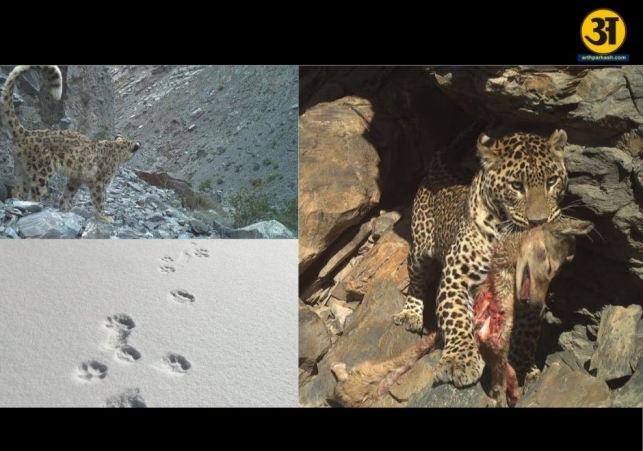
Snow leopard numbers in Himachal climb to 83
Himachal snow leopard population rises from 51 to 83 in four years, survey shows
- By Gurmehar --
- Friday, 03 Oct, 2025
Himachal Pradesh has seen a significant increase in its snow leopard population over the past four years, according to a recent survey conducted by the state forest department. The latest assessment shows that the number of snow leopards in the state has risen to approximately 83 individuals, up from 51 in the first population estimation carried out in 2021. This growth reflects the success of ongoing conservation efforts and the robust management of snow leopard habitats in the region.
The wildlife wing of the Himachal Pradesh forest department carried out the second state-wide assessment to estimate the snow leopard population. The survey involved a large-scale camera trapping exercise across six representative sites, covering the 26,000 km² area identified as snow leopard habitat. This method allowed officials to collect accurate data on individual animals and their movements in both high and low-density regions.
According to the survey, snow leopard density in the state ranges from 0.16 to 0.53 individuals per 100 km². The highest densities were recorded in the trans-Himalayan regions of Spiti and Pin valley, followed by Upper Kinnaur and Tabo. These regions are known for their rugged terrain, harsh climate, and relative isolation, which provide ideal conditions for snow leopards to thrive.
Officials explained that 44 unique snow leopards were detected during the camera trapping survey, the same number as in the previous 2021 survey. These individuals were detected 262 times in total, providing enough data to estimate the overall population size at 83 adults, excluding cubs. The survey was conducted in partnership with the Nature Conservation Foundation (NCF), Bengaluru, to ensure scientific accuracy and consistency with previous estimates.
The survey demonstrates that targeted conservation measures, including habitat protection and anti-poaching initiatives, are having a positive impact on snow leopard numbers in Himachal Pradesh. Forest department officials emphasized the importance of continued monitoring to maintain these gains and ensure the long-term survival of this endangered species.
Discoveries beyond snow leopards
The recent survey not only focused on snow leopards but also recorded important findings about other wildlife in the region. Notably, the study reported the first official sighting of Pallas’s cat (Otocolobus manul) in Kinnaur. This small wild cat, rarely seen in the wild, had not been officially documented in the area before, making it a significant discovery for conservationists and researchers.
Additionally, the survey confirmed the rediscovery of the woolly flying squirrel (Eupetaurus cinereus) in Lahaul. This elusive species, known for its thick fur and nocturnal habits, had not been observed in the region for years. Its rediscovery highlights the importance of regular wildlife surveys in detecting and monitoring rare species in remote Himalayan landscapes.
The study also examined the distribution of key prey species, which are crucial for maintaining healthy snow leopard populations. Using an ensemble modelling approach, researchers refined distribution maps for species such as blue sheep (Pseudois nayaur), Himalayan ibex (Capra sibirica), and musk deer (Moschus leucogaster). Monitoring these prey populations helps conservationists understand the ecological balance and ensure that snow leopards have sufficient food sources in the wild.
Beyond prey species, the survey collected data on other mammals inhabiting the same landscapes. These included Himalayan wolves (Canis lupus), brown bears (Ursus arctos), common leopards (Panthera pardus), red foxes (Vulpes vulpes), stone martens (Martes foina), mountain weasels (Mustela altaica), and yellow-throated martens (Mustela flavigula). By mapping their distributions more accurately, researchers can better plan habitat protection measures and assess potential human-wildlife conflicts in the region.
ALSO READ: RSS completes 100 years of service and organisation
ALSO READ: Coffee on empty stomach? AIIMS doctor warns against these coffee habits
The comprehensive survey represents a significant step forward in understanding Himachal Pradesh’s rich biodiversity. It emphasizes the value of scientific research and field studies in shaping effective conservation strategies. Officials stressed that maintaining the gains made in snow leopard population growth requires ongoing monitoring, anti-poaching enforcement, and habitat protection.
Himachal Pradesh’s success story with snow leopards serves as a model for other Himalayan states and regions worldwide. It shows that careful planning, community involvement, and scientific research can lead to measurable improvements in wildlife conservation. With continued efforts, the state aims to sustain a healthy population of snow leopards and other rare species, ensuring ecological balance in the fragile Himalayan ecosystem.
In conclusion, the latest survey confirms that Himachal Pradesh’s snow leopard population has grown from 51 to 83 individuals over the past four years. The study’s additional discoveries, including Pallas’s cat and the woolly flying squirrel, underscore the importance of large-scale wildlife assessments. As conservation efforts continue, the state remains committed to protecting its unique Himalayan biodiversity for future generations.
Related News